
Job Search AgentAn AI-powered job search built like a sales pipeline, from prospecting to conversion.
After 20 years in field sales, I learned that finding more prospects isn’t the same as closing more business. Close more, not just find more.
About the Project
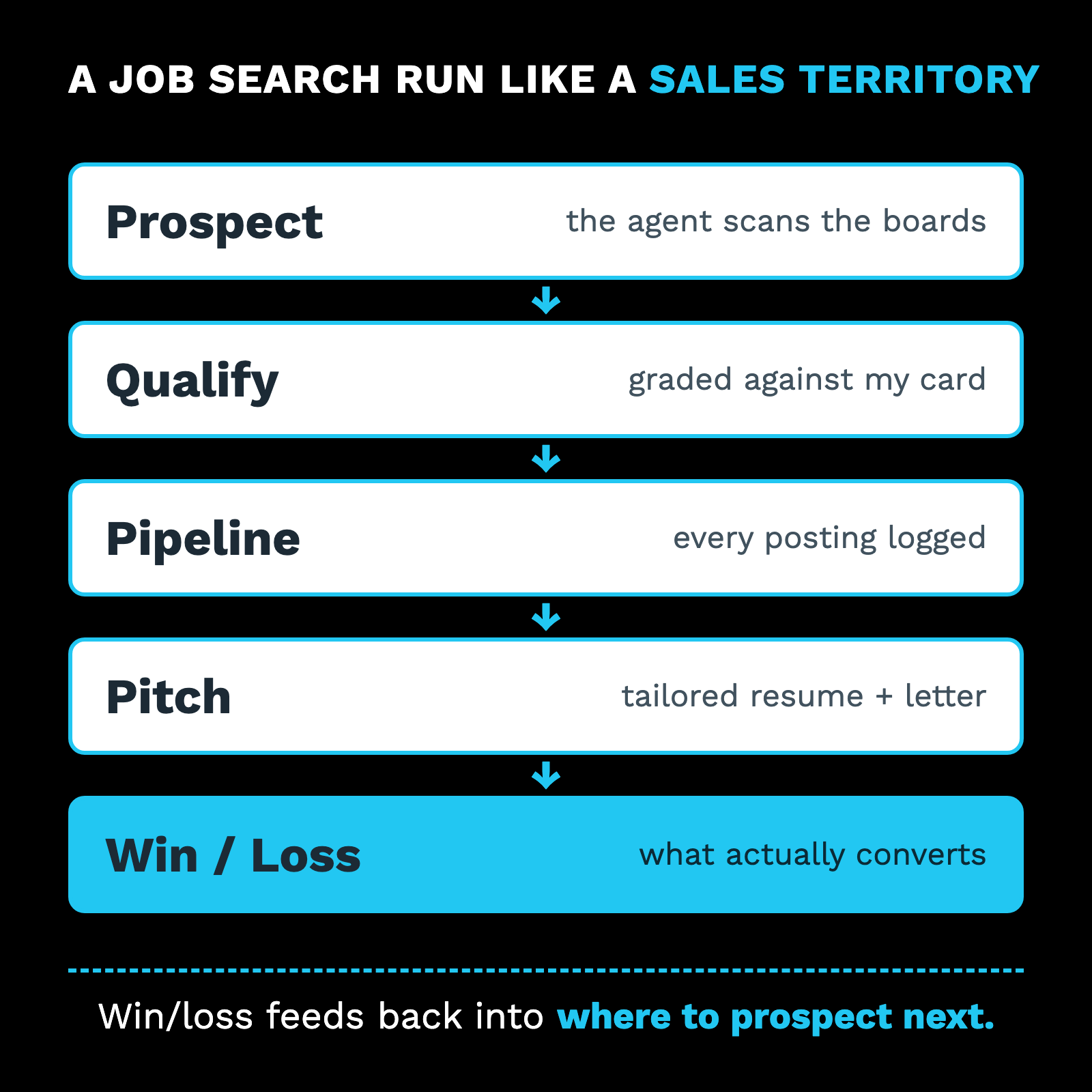
My sales role ends at year end, so I built an AI system to help find the next one. I approached it the way I’ve managed a sales territory for more than 20 years: find prospects, qualify them, track the pipeline, and study what converts. The agent can research thousands of opportunities, but the real value came when I started measuring results and changing the strategy.
More prospects don’t matter if none of them convert.
Primary Challenges
- Job alerts are packed with duplicates, expired postings, and occasional fakes, making it difficult to find opportunities worth pursuing.
- Matching keywords isn’t qualifying a prospect, so the agent needed to understand what actually makes a job worth my time.
- Without a reliable pipeline and win/loss data, there’s no way to know whether the search is improving or just getting busier.
Activity is easy to measure. Results are what matter.
Built With
David Inman - Qualification criteria, operating rules, story development, application decisions, and outreach
Claude Code - Writes and runs the research tools, grading system, pipeline ledger, resume builder, and drafts
Job boards, alerts and company careers pages - Every source, verified at the company’s own site
Discovery & Audit
Prospecting | Verification | Qualification
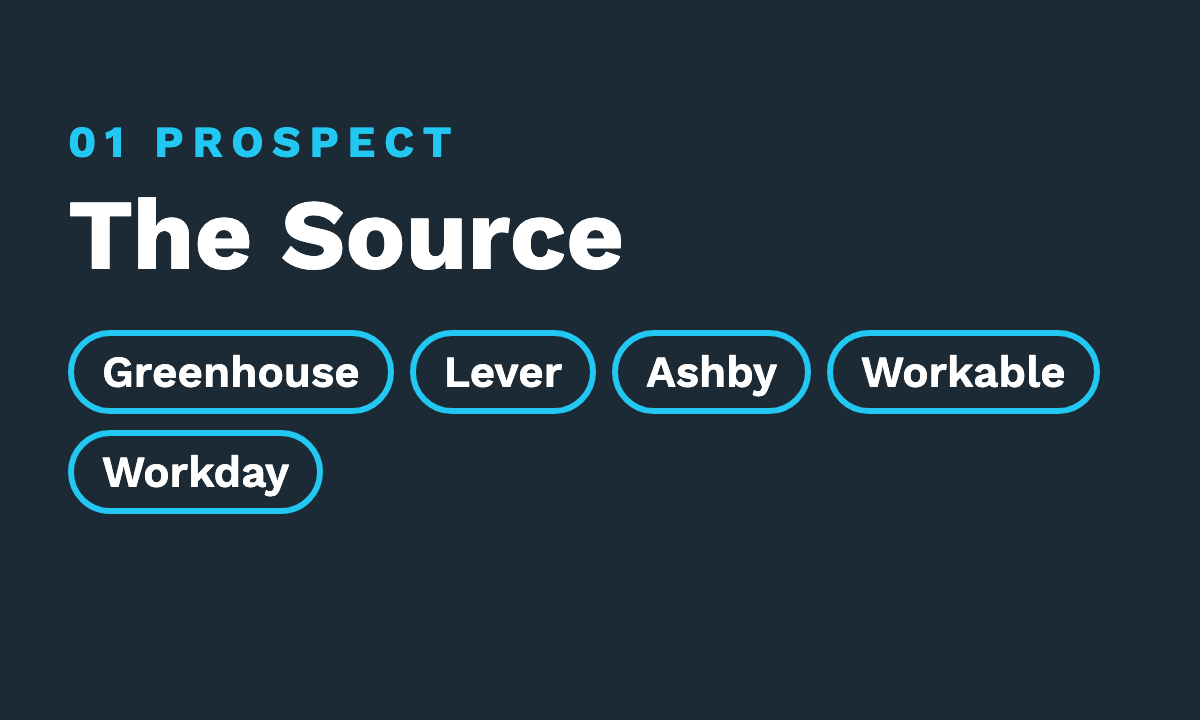
- Mapped the public job feeds behind major applicant systems to find openings directly from employers rather than relying on aggregator alerts.
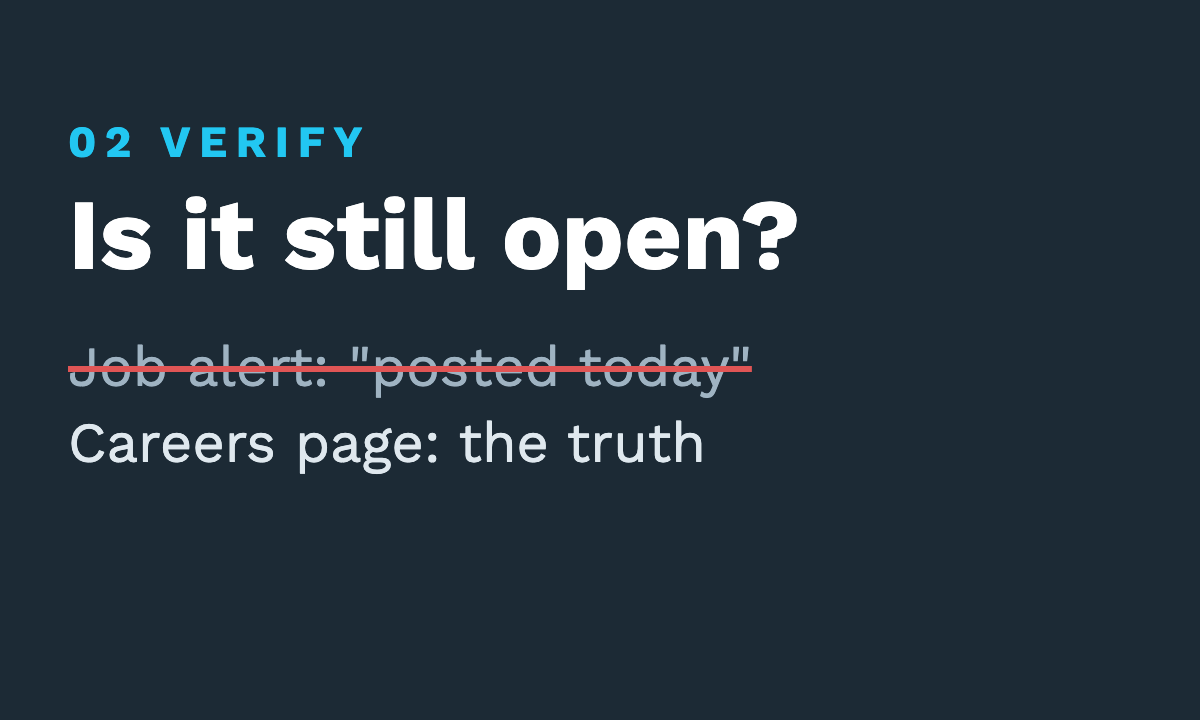
- Established company careers pages as the final check on whether a job is actually open.
- Defined the characteristics of a strong prospect based on my current skills, location requirements, and the kinds of companies most likely to need them.
- Identified the information needed to track each opportunity from discovery through rejection or interview.
System Design
Grading | Pipeline | Feedback
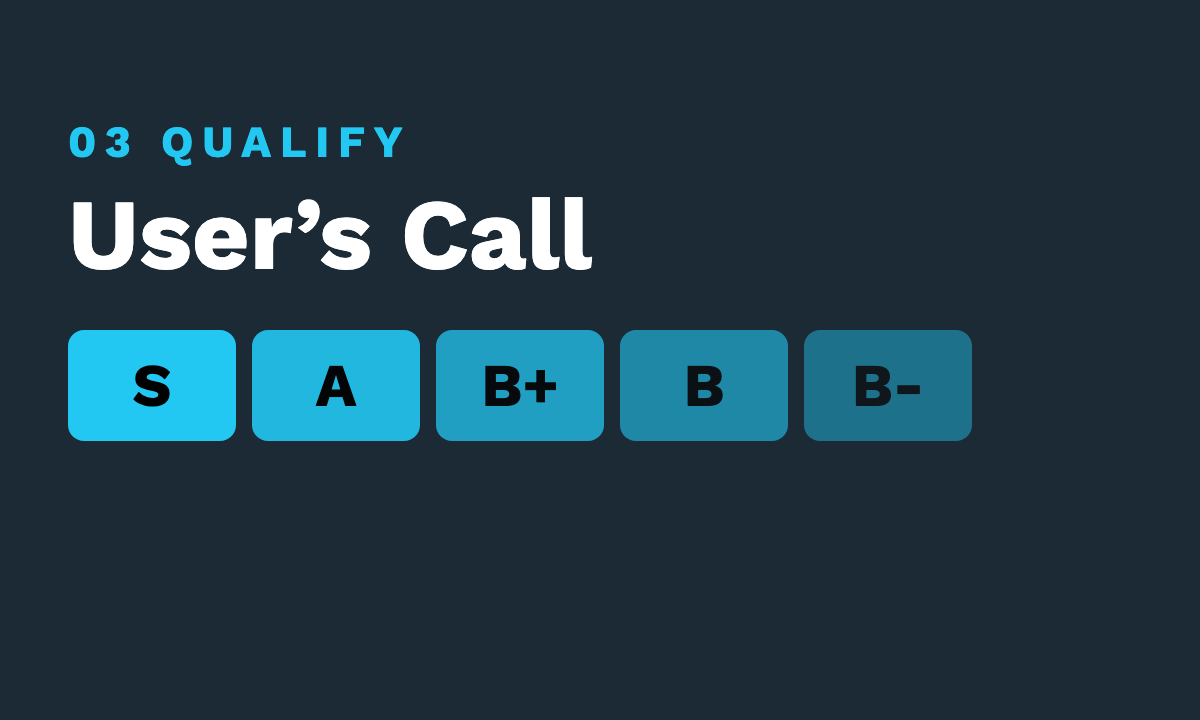
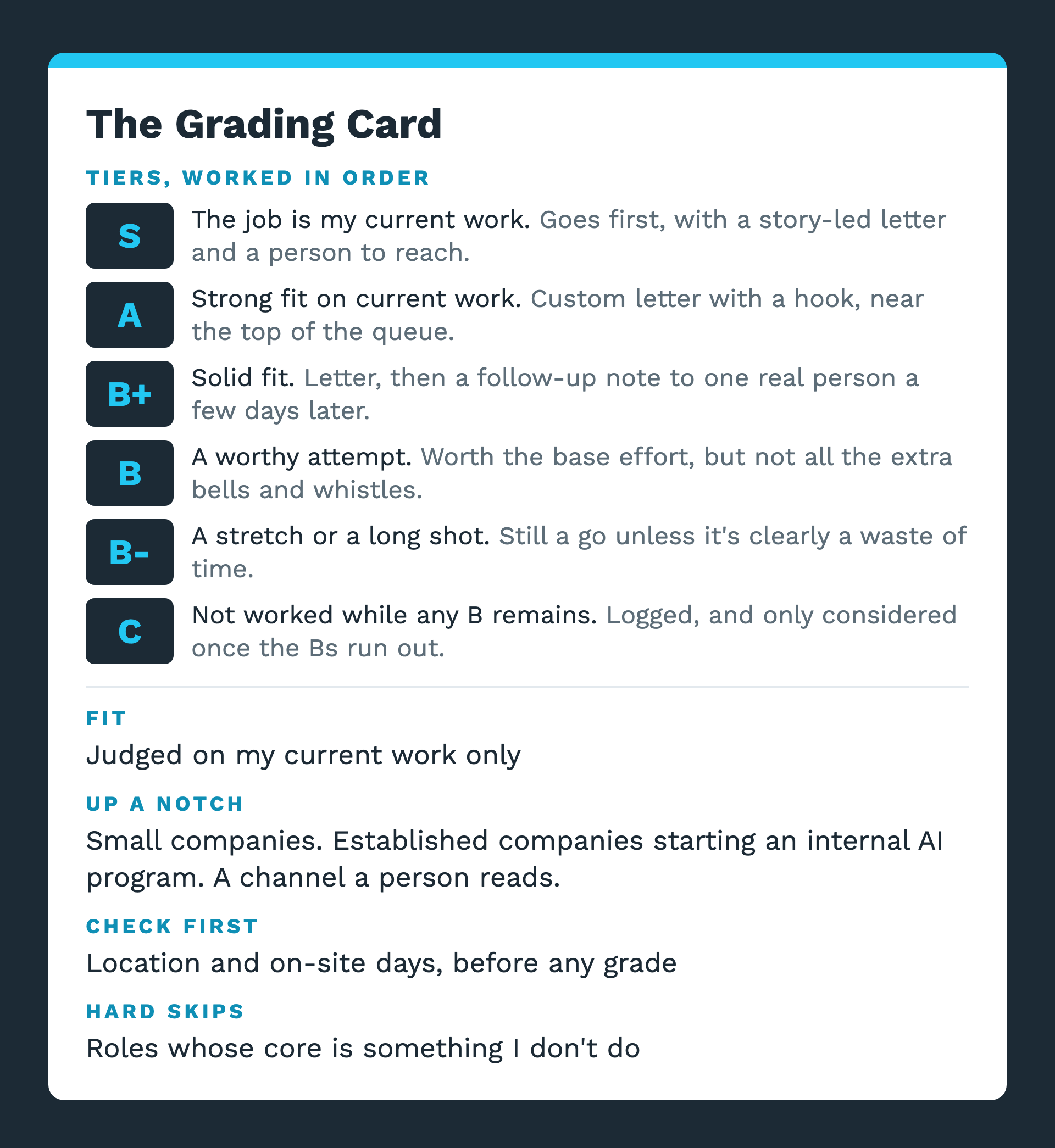
- Created a qualification card that grades postings from S to B-minus, with modifiers for company size, AI adoption opportunities, and location.
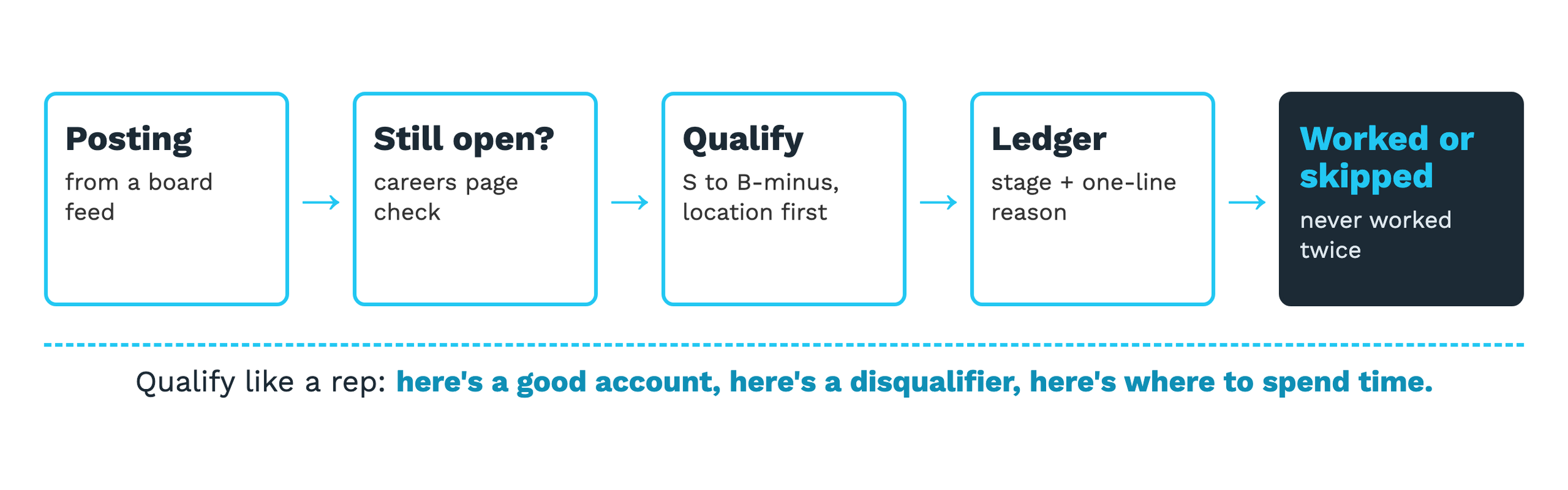
- Designed a ledger that records every posting, its status, and a one-line explanation, including skipped jobs so the same prospect doesn’t get worked twice.
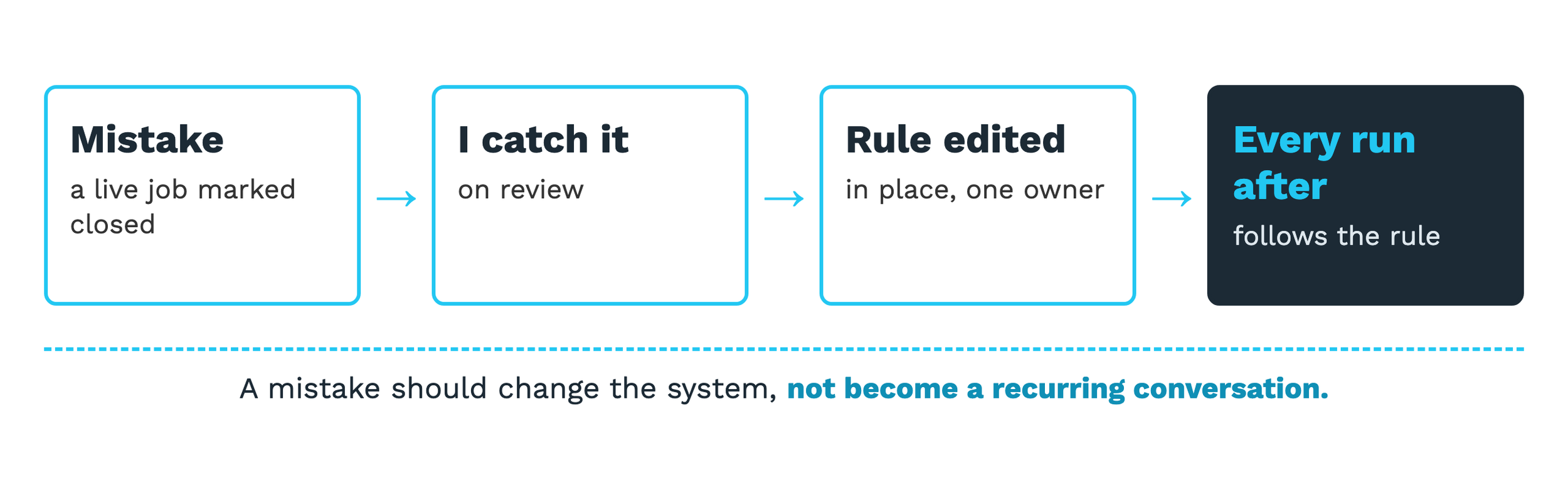
- Built a process for turning grading mistakes into permanent rule changes, then reorganized the growing rulebook into four focused files when it became unmanageable.
- Developed a cover-letter voice profile from my own writing, with each draft starting from a real story rather than generic AI-generated enthusiasm.
Build & Operate
Execution | Measurement | Conversion
- Directed Claude Code to build and run the scanners, grading tools, ledger, and tailored resume generator, including page-by-page checks of rendered documents.
- Added outcome tracking for cover letters, resume versions, company types, repeat applications, and application channels.
- Reviewed the pipeline to identify which activities improved results and which were simply consuming effort.
- Reprioritized the queue around human-read channels and began prospecting companies in the licensed-product and pop-culture industries where I already know the business.
Work the Accounts That Buy
I’ve spent more than 20 years as a field sales rep, managing a territory and building relationships with accounts, some of which have been customers for two decades. When I needed to find a new job, I recognized the problem immediately. There were plenty of prospects, but finding the right ones and getting a meaningful conversation was another matter. I needed a prospecting operation, not another pile of job alerts.
I directed Claude Code to build one. The agent works every source I have: daily alerts from the major job boards, company job boards scanned directly, regional and industry sweeps, and the careers pages of companies I target. It verifies each opening at the source, reads the description, and grades it against my criteria. Instead of sorting through endless alerts myself, I get a qualified pipeline of opportunities worth considering.
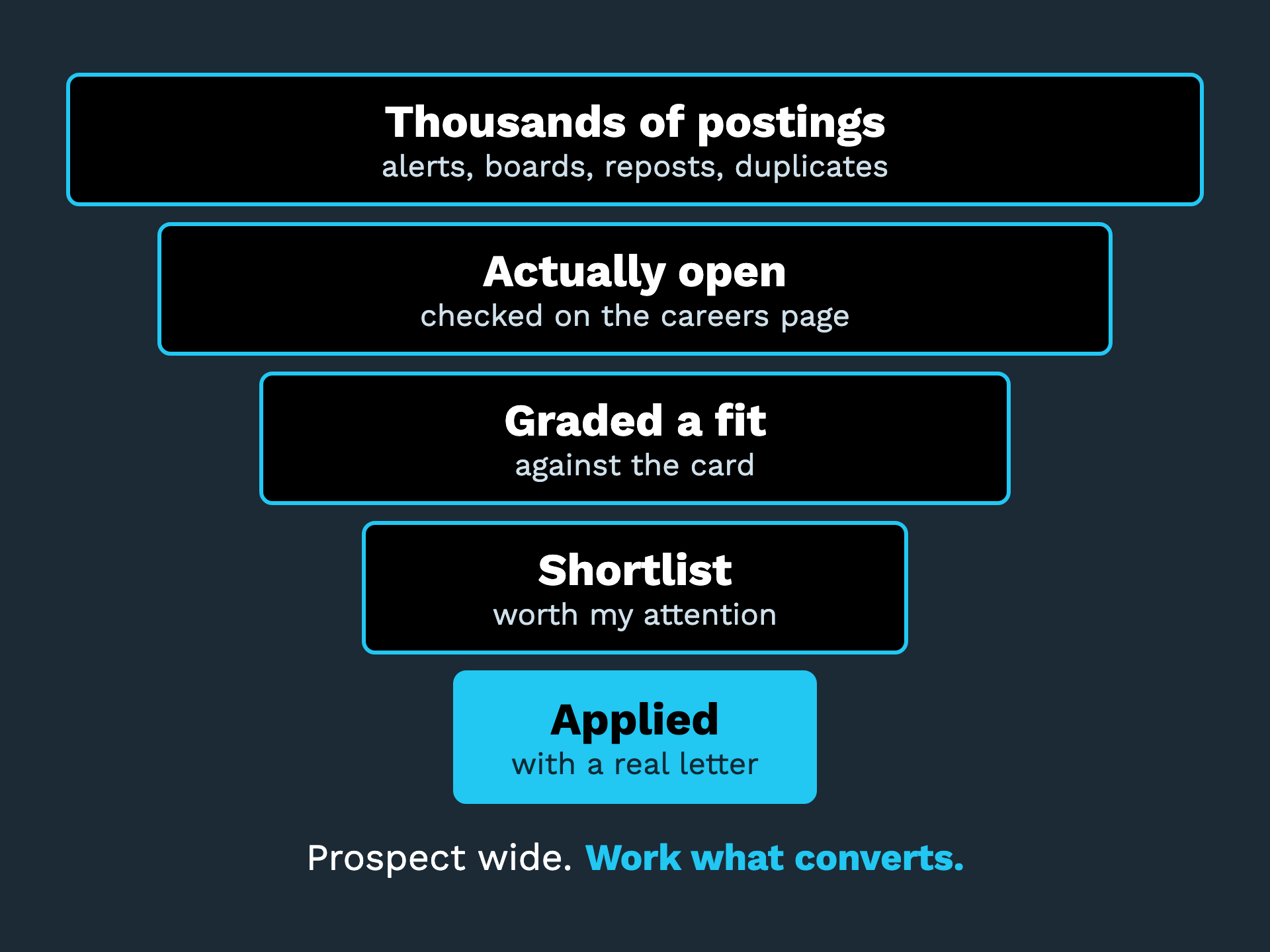
The grading card is the heart of the system. It’s the equivalent of explaining my territory to a new sales rep: here’s what a good account looks like, here’s what disqualifies one, and here’s where to spend your time. Jobs get graded from S to B-minus, with adjustments for smaller companies and established businesses building internal AI programs. Location and on-site requirements get checked before anything receives a grade. When the agent gets something wrong, I change the rule rather than simply correcting that one result.
Every posting goes into a ledger, including the skips. Thousands of listings, each with a status and a reason. That prevents duplicate work and gives me a record of what happened. The system wasn’t perfect out of the gate. It once called a live job closed because it checked a dead link. Another time it recommended a job without noticing it meant five days a week on-site, a long drive away. Those mistakes became better rules. Eventually the rulebook resembled a giant pile of Christmas lights, so I rebuilt it into four shorter files. Much easier to maintain, and considerably less likely to require untangling.
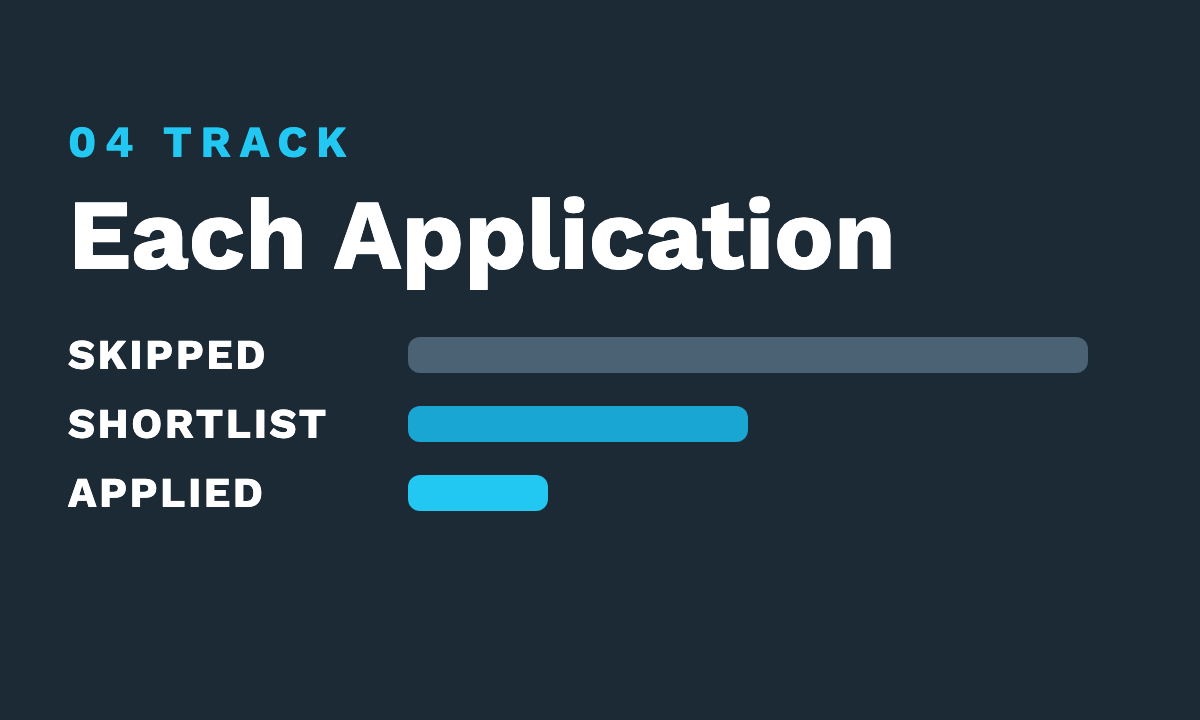
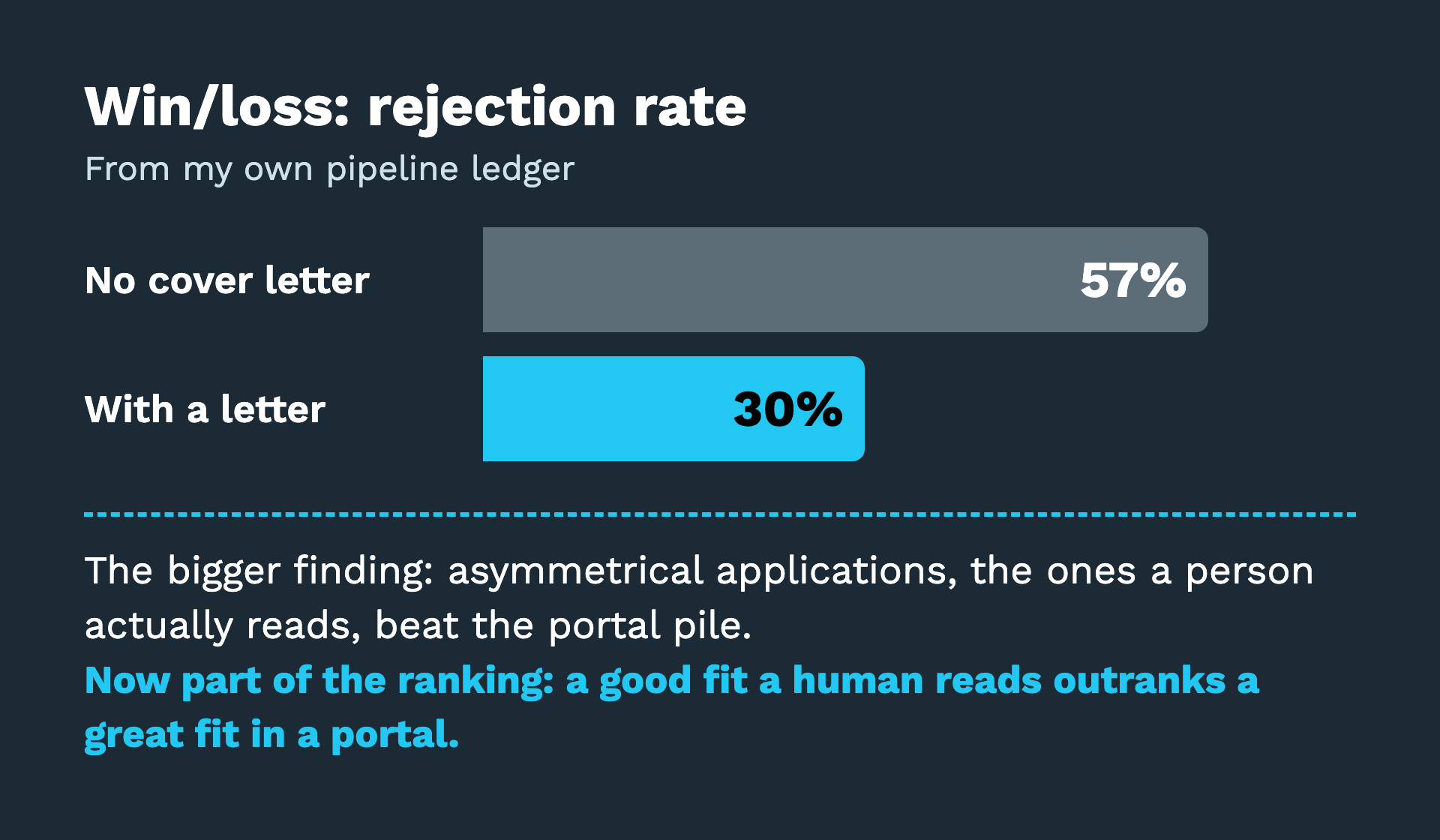
Then I started doing win/loss reviews. Applications without a cover letter were rejected 57% of the time. With a letter, that dropped to 30%. My own letters graded an A-minus for voice, while the agent’s unguided drafts earned a D, so I taught it to work from my writing and a story I provide. Resume variations weren’t changing outcomes. Neither was applying again to the same company. Company type affected how quickly rejections arrived, but not whether they came. The numbers were telling me where to stop wasting effort.
The biggest finding was the channel. In a portal I’m one of hundreds of applications in the same format, run through the same filter, and that symmetrical contest almost never produced a conversation. What worked was asymmetrical: a direct email to a small company, a note to the owner, a letter that opens with a story instead of a keyword list. Those applications reach a person and don’t look like the rest of the pile. So I built it into the ranking system. The grading card now scores the channel along with the fit, and a good fit with a path to a real person outranks a great fit through a portal. I also started searching my own professional territory, the licensed-product and pop-culture businesses I’ve worked with for years, where that kind of approach comes naturally. Every application now records its channel so I can keep testing the results.
The system now spends less effort chasing volume and more effort finding opportunities that can turn into conversations. It researches, qualifies, prepares tailored materials, and maintains the pipeline. Applications get a real cover letter, and the best ones get a follow-up note to a real person. I even built a scoreboard with points and levels, because maintaining momentum matters. Sales floors figured that out a long time ago.
The larger lesson is that AI makes volume cheap. That doesn’t automatically make volume valuable. The advantage comes from knowing which activities produce results, measuring them, and directing the system accordingly. Build the process, instrument it, learn from the outcomes, and keep improving. It’s the same discipline I’d bring to any AI operation, whether the goal is winning customers, improving workflows, or getting people to use a new tool.
Let’s Connect
I built this system to find my next job, and as I keep telling myself, it only has to work once.
I love meeting new people.