
square, 1:1 (David)
AI Catalog AgentsA system of AI agents that builds, checks, and maintains a large product database.
Getting AI to do something impressive once is easy. Getting it right every day is the trick.

About the Project
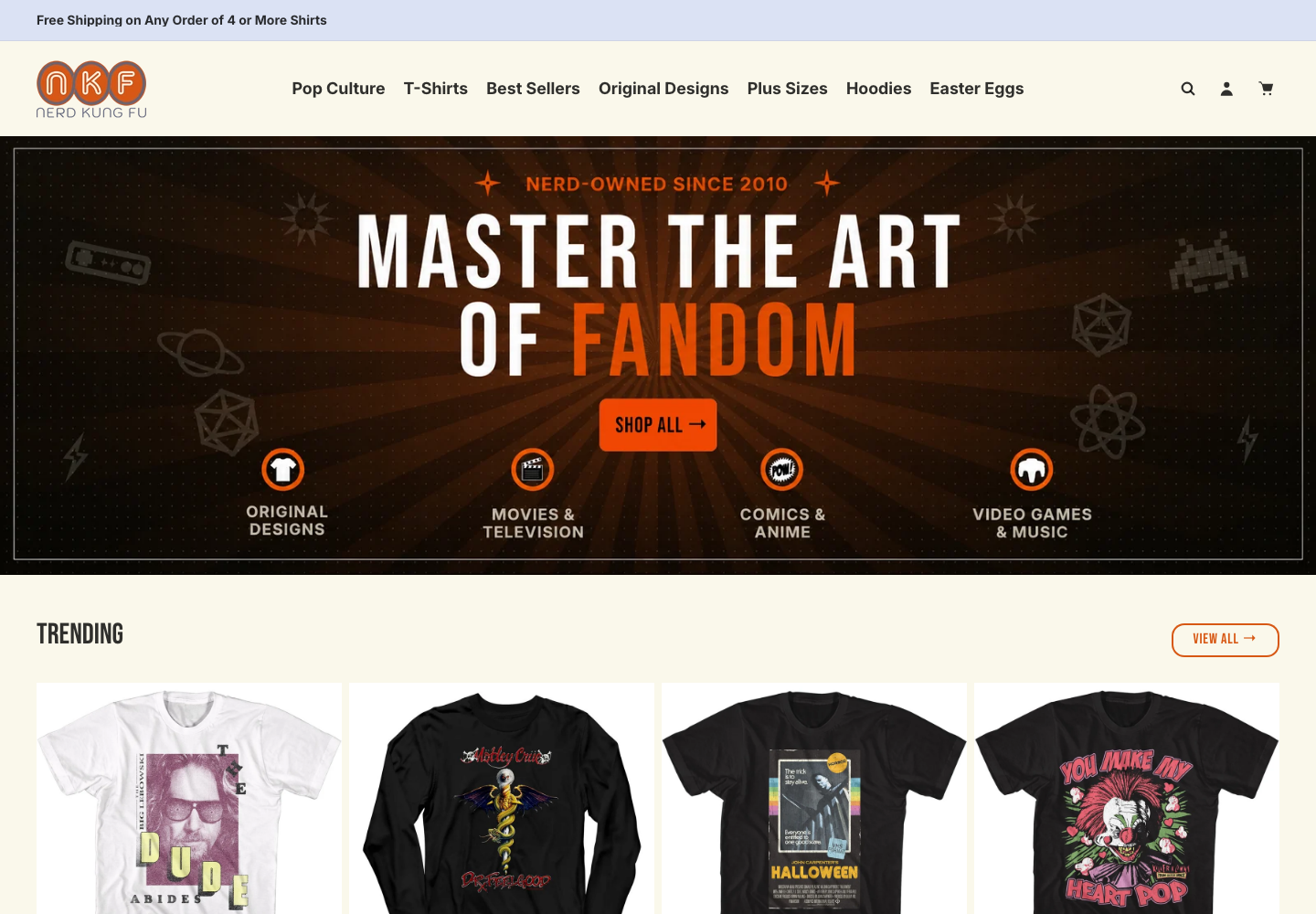
I founded NerdKungFu, an online store selling officially licensed pop-culture apparel. With hundreds of thousands of size and color variations, keeping the catalog accurate is a substantial job. I designed a system of AI agents that handles much of that work, with written rules, independent checks, and a human reviewing the exceptions.
A working AI system needs more than a good prompt. It needs someone checking its homework.
Primary Challenges
- Every supplier sends product information in a different spreadsheet format, requiring someone to interpret and reenter it.
- Missing images, inconsistent sizes, duplicate designs, and incomplete records can multiply into thousands of bad listings.
- An AI can confidently complete a task incorrectly, and checking every result by hand defeats the purpose of automating it.
The problem wasn’t getting AI to build products. It was knowing when it got them wrong.
Built With
David Inman - System design, operating procedures, rules, testing, and review
Claude Code - AI coding agent that writes and runs the scripts under my direction
Shopify Admin API - Connects the agents to the live store and its product catalog
Discovery & Audit
Supplier Data | Existing Catalog | Failure Points
- Examined supplier spreadsheets to identify inconsistent fields, naming conventions, sizes, and image information.
- Audited the existing catalog for duplicates, missing data, incorrect images, and unpublished products.
- Identified the checks needed before a product could safely be created.
- Established SKU as the unique identifier, rather than relying on product titles that can change or repeat.
System Design
Written Rules | Guardrails | Independent Review
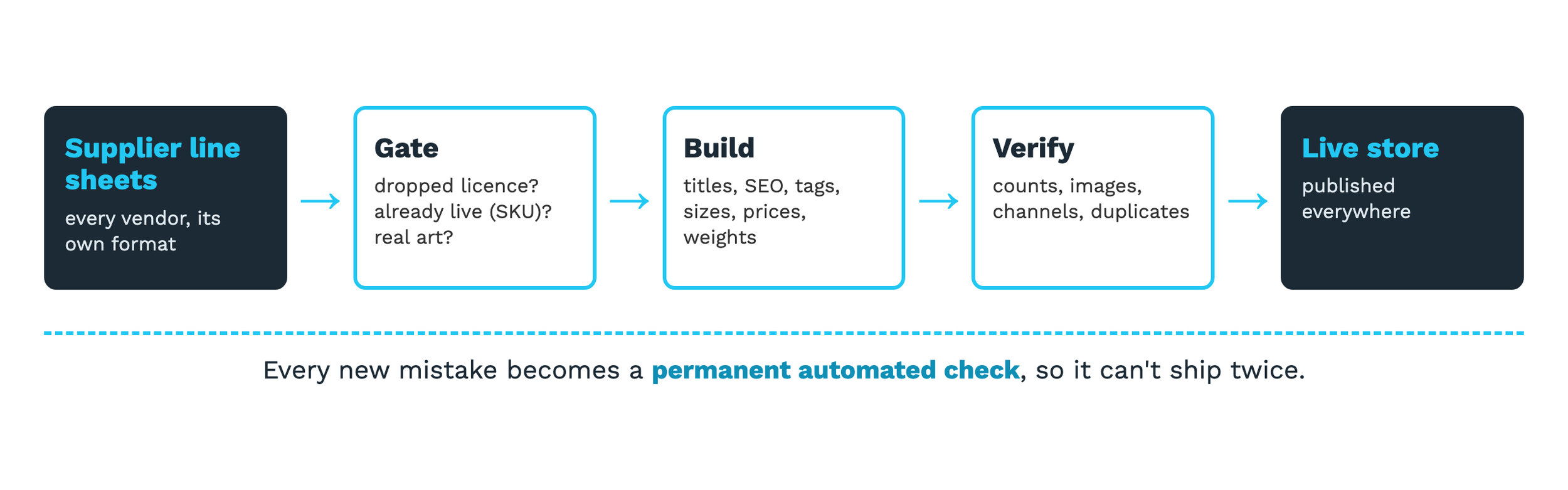
- Created a pre-build gate that rejects discontinued licenses, duplicate SKUs, and garments without the correct artwork.
- Designed builders to turn supplier data into complete Shopify listings, including descriptions, pricing, collections, size charts, and shipping information.
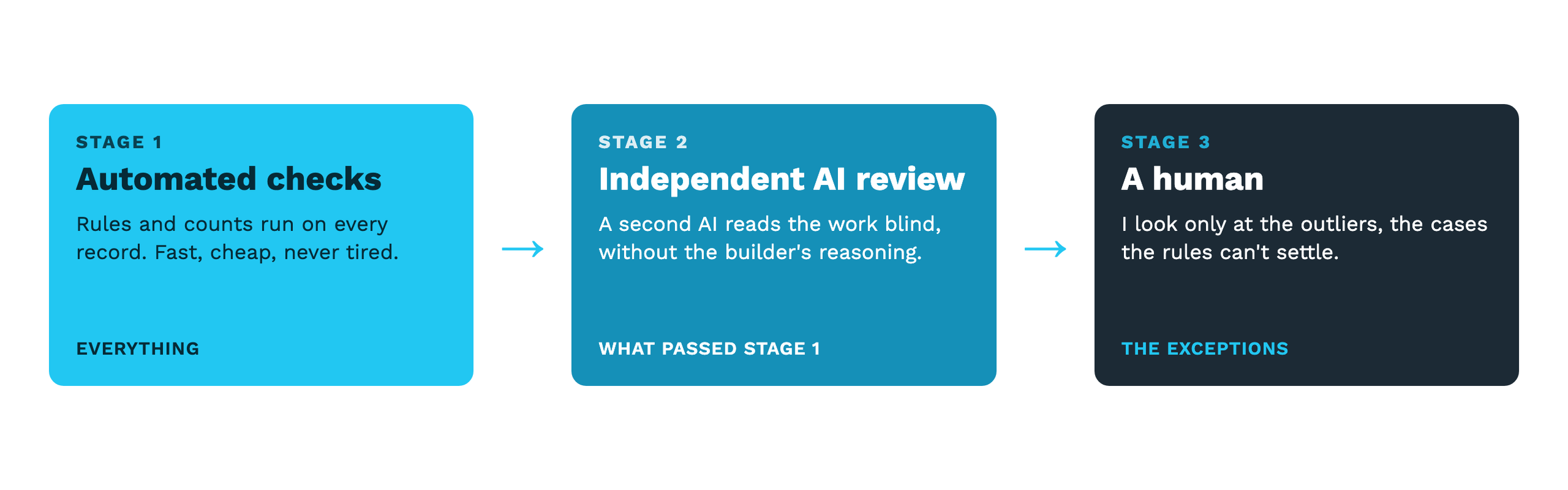
- Established three review stages: automated validation, independent AI review, and human inspection of exceptions.
- Wrote operating procedures and required checks so each step is documented, repeatable, and accountable.
Build & Operate
Live Automation | Quality Checks | Continuous Improvement
- Directed Claude Code to build agents that create and publish products through Shopify’s API.
- Added verification for product counts, images, publication status, duplicate titles, and required data.
- Built a bookend quality check that runs before and after each batch, with zero new problems allowed.
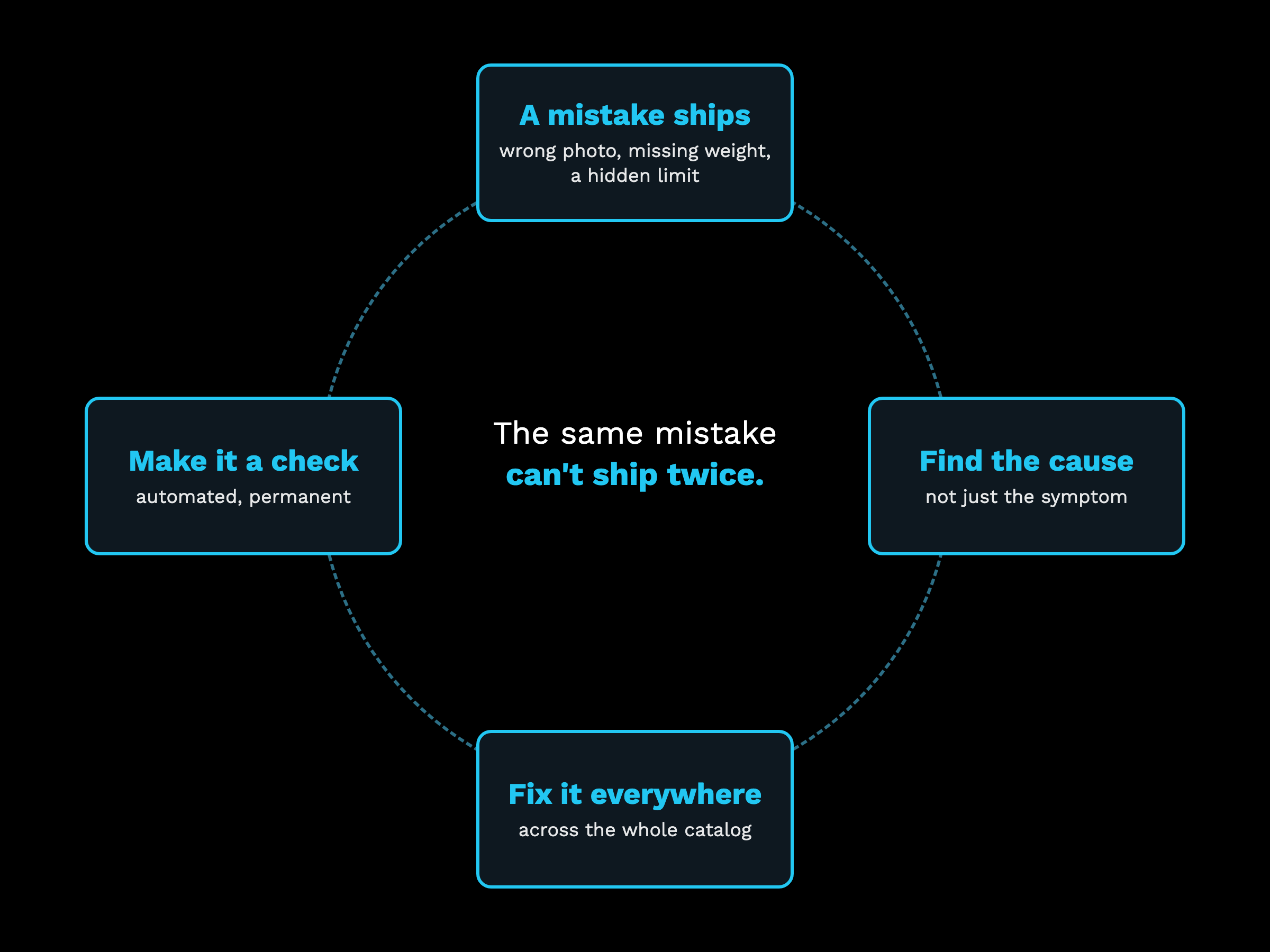
- Turned newly discovered failures into permanent automated checks, rather than relying on someone to remember them.
Teaching AI to Check Its Own Work
Every supplier has its own idea of what a product spreadsheet should look like. Different columns, inconsistent terminology, sizes spelled several ways, and images that may or may not match the garment. Someone had to interpret all of it before a product could go into the store.
Doing that manually was slow and tedious. Worse, errors didn’t necessarily announce themselves. A mistake in a spreadsheet could become hundreds of incorrect product variations before anyone noticed.
I started building agents with Claude Code to do the repetitive work. But getting them to create listings was only half the problem. I needed to know that what they created was correct, so I built a system of gates, written procedures, automated checks, independent AI review, and human oversight.
One early version encountered a sweatshirt without its own product photo and helpfully borrowed the t-shirt photo instead. Dozens of listings ended up showing the wrong garment. The new rule is absolute: no artwork for that garment means no listing. Never substitute. Obvious in theory. Painfully obvious when it breaks in practice.
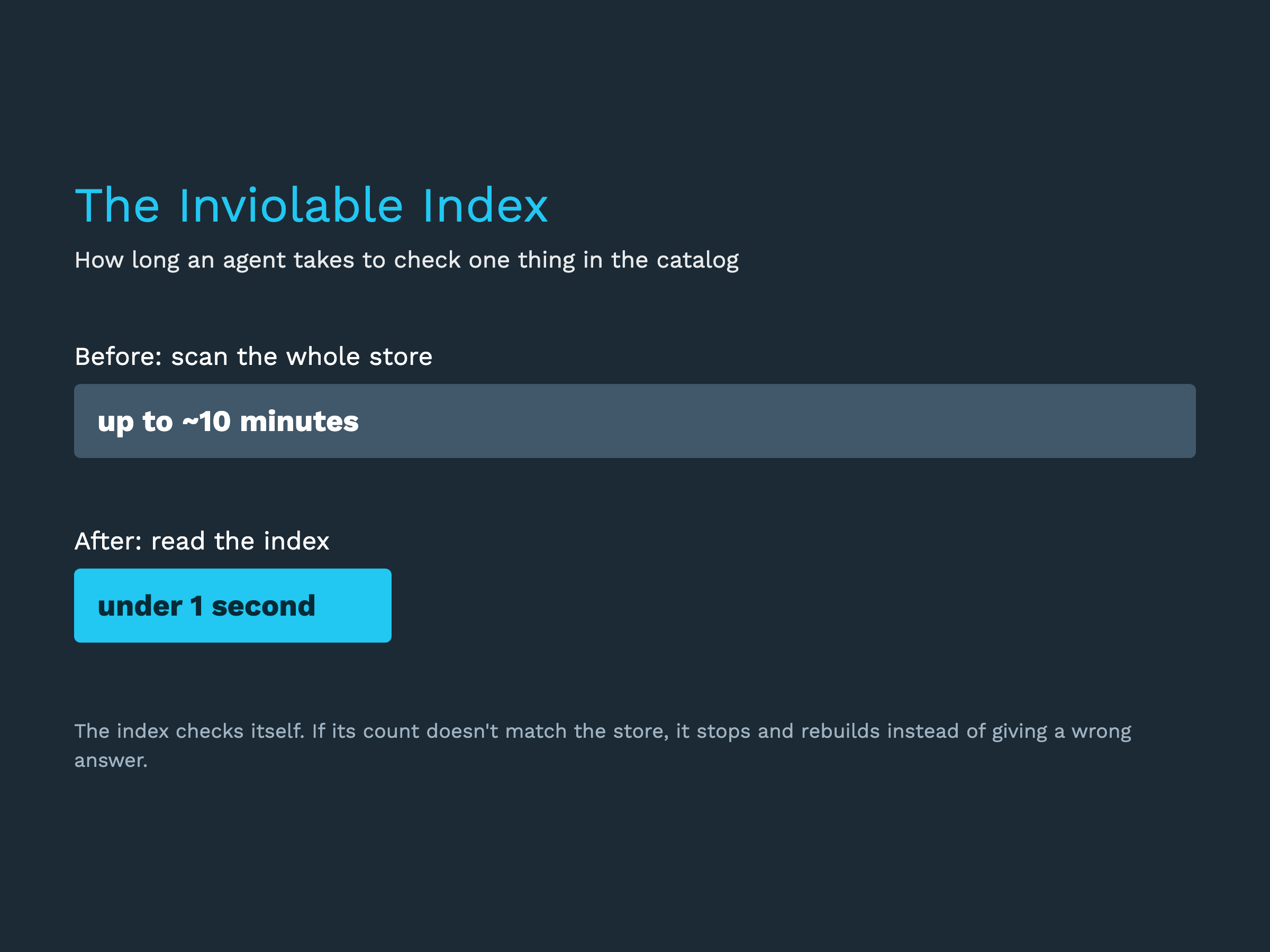
As the catalog grew, another problem emerged. The agents were repeatedly scanning the entire store to answer simple questions. Some lookups took around ten minutes and consumed substantial AI resources. The system was spending too much time checking things it should already know.
I built a compact text index that reduced those lookups to under a second. But a fast wrong answer isn’t much of an improvement, so the index verifies its own record count against the store. If the counts disagree, it stops and rebuilds itself. I explain the approach in my LinkedIn article, The Inviolable Index.
The catalog now runs through a repeatable system instead of depending on someone manually interpreting every spreadsheet. Agents check what already exists, build eligible products, verify their work, and flag exceptions for my review. Each batch is compared against its starting quality baseline, and new problems must be resolved before the work is considered complete.
The bigger achievement isn’t the number of products created. It’s that mistakes become rules, required steps leave records, and routine work no longer demands routine human attention. I still own the results, but I don’t have to personally perform every step to get them.
Let’s Connect
I build AI systems that do real work, check their own results, and know when to ask a human for help.
I love meeting new people.